


Summer and Medications: A Short Blog
Staying Safe with Medication in Hot Weather: A Quick Guide
The sun’s out, you’re making the most of your summer plans, and your health should keep up with you. If you’re living with a long-term condition like diabetes, high blood pressure, heart disease or chronic pain, it’s important to know how heat can affect your medicines. A little planning can go a long way to help you enjoy summer safely.
Plan Ahead
Understand the risks
Most medicines should be stored at room temperature (15 to 25°C). High temperatures or direct sunlight can break them down and make them less effective or even unsafe. Heat can also damage packaging, like blister packs or inhalers.
Fridge or not?Some medicines, such as insulin, need to be stored in the fridge (2 to 8°C). Others should never be frozen. Always check the label or ask your pharmacist if you're not sure [1].
Check in before you travelIf you’ve got a trip coming up or a heatwave is on the way, book a quick review with your GP or pharmacist. They can advise on storage, dosing, or whether you might need cooling products like insulated pouches.
Carry your prescriptionsFor essential medication like insulin or inhalers, take a prescription with you, especially if you’re going away. If you’re travelling in the UK, the NHS App can make things easier. You can request repeats, view prescriptions and nominate a local pharmacy near your destination [2].
Be Mindful of Side Effects in the Sun
Some medicines can make your skin more sensitive to sunlight. This includes certain antibiotics, antihistamines, NSAIDs like ibuprofen, and medications for mental health such as amitriptyline. Always check your leaflet or speak to your pharmacist if you're unsure. You may need to wear high-SPF sunscreen and avoid long periods in direct sunlight [3].
Specific Advice for Common Medications
Diabetes medicines
- Insulin can break down above 30°C. Keep it cool but don’t freeze it. A cooling wallet or insulated pouch is ideal when travelling
- Tablets like metformin or gliptins should be kept dry and away from heat or fluctuating temperatures [4]
Blood pressure and heart medicines
- ACE inhibitors, beta-blockers, calcium channel blockers and diuretics are sensitive to heat
- Diuretics increase fluid loss, so it’s especially important to stay well hydrated to avoid dizziness or fainting [5]
Painkillers
- Opioids and codeine-based painkillers can become unstable in high temperatures
- Heat can also worsen side effects like drowsiness or low blood pressure. Take extra care if you’re in the sun or exercising
- NSAIDs like ibuprofen can break down in heat or moisture, making them less effective
Travel Tips for Hot Days
Keep original packagingThis helps you check instructions and expiry dates, and can be useful during travel checks or emergencies.
Skip the bathroom cabinetBathrooms can get humid. Try a cool, dry spot like a hallway cupboard.
Use insulated bagsIf you're out and about, store medicines like insulin, eye drops or biologics in a cooling pouch. Avoid checked luggage or hot car gloveboxes.
Don’t cook your medsNever leave medicines in a hot car, on a windowsill or in direct sunlight. Cars can heat up fast even with the windows open.
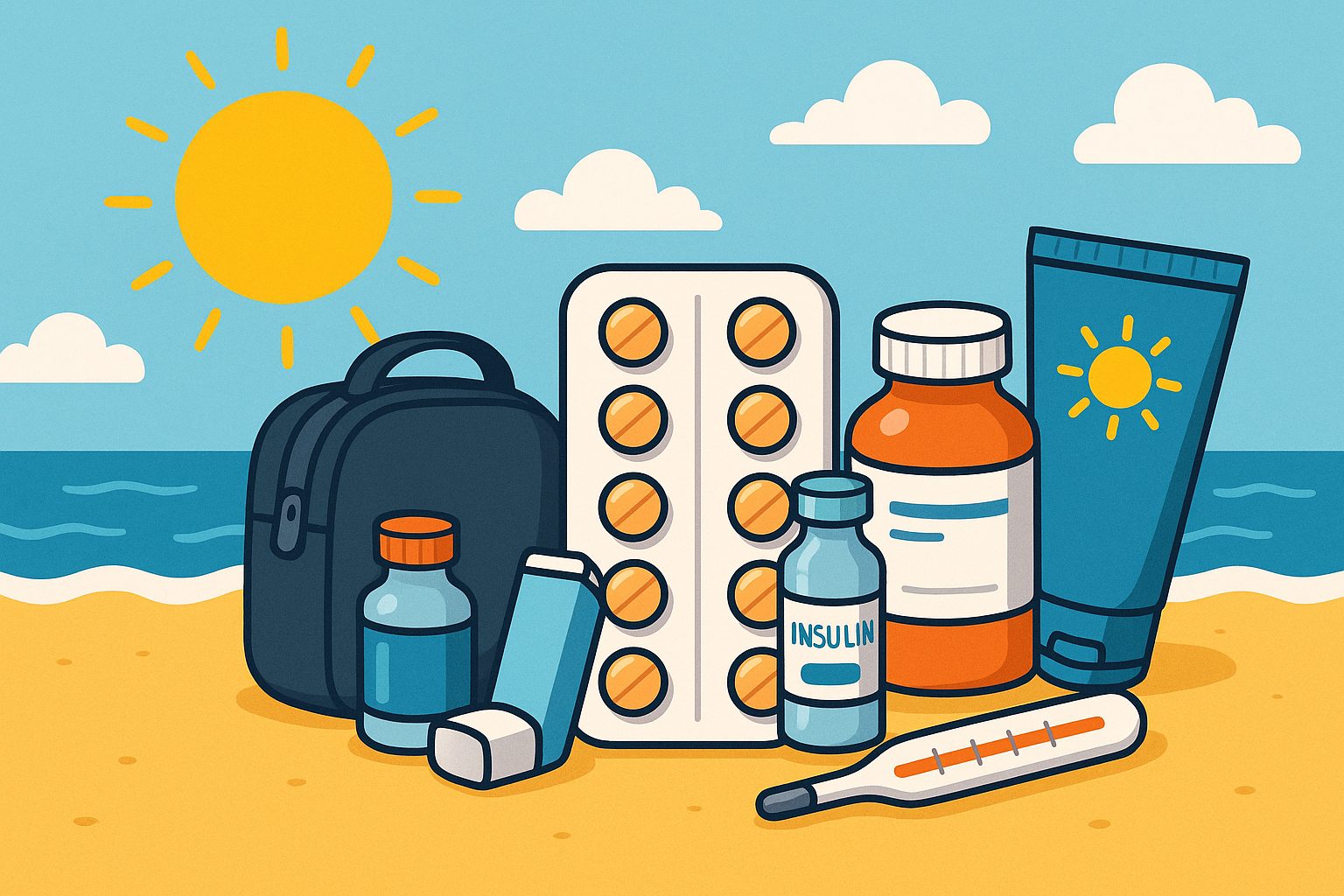
Care with inhalersSome inhalers are pressurised and can be affected by heat. Keep them out of direct sun and don’t leave them in a beach bag.
Keep an Eye on Your Medicines
Look for changesIf your medicine has melted, changed colour or smells different, it’s safer to throw it away. The same goes for insulin that’s gone cloudy or lumpy.
Use a mini thermometerThese can help you check if your storage space is staying within the safe range.
Carry a medication cardList your medicines, doses and any special storage instructions. This can be a real help in emergencies.
Staying in Control
Hydration mattersSome medicines increase your risk of dehydration. Carry water with you and watch for signs like fatigue or dizziness.
Stick to your routineDon’t delay or skip medicines to fit around summer plans. Set reminders or use a pillbox to stay on track.
Watch how you feelIf you feel off, tired, dizzy or light-headed, it could be the heat or your medication. Ask for advice if you’re unsure.
Have a backup planKnow where your nearest pharmacy is. If you’re in the UK, call NHS 111 any time for help. They can guide you to the right place for your medicine even out of hours.
Final Word
Hot weather doesn’t have to disrupt your health. With a few smart steps, you can keep your medicines safe and your condition well managed whether you’re at the park, the seaside or travelling away. Stay cool, stay safe and enjoy your summer.
References
- King’s College Hospital NHS Foundation Trust: How to store your medications during hot and cold weather
- NHS App – prescriptions and pharmacy nomination
- NHS: Medicines and sun sensitivity
- Diabetes UK: Travel and diabetes
- NHS Inform: High blood pressure (hypertension) treatment